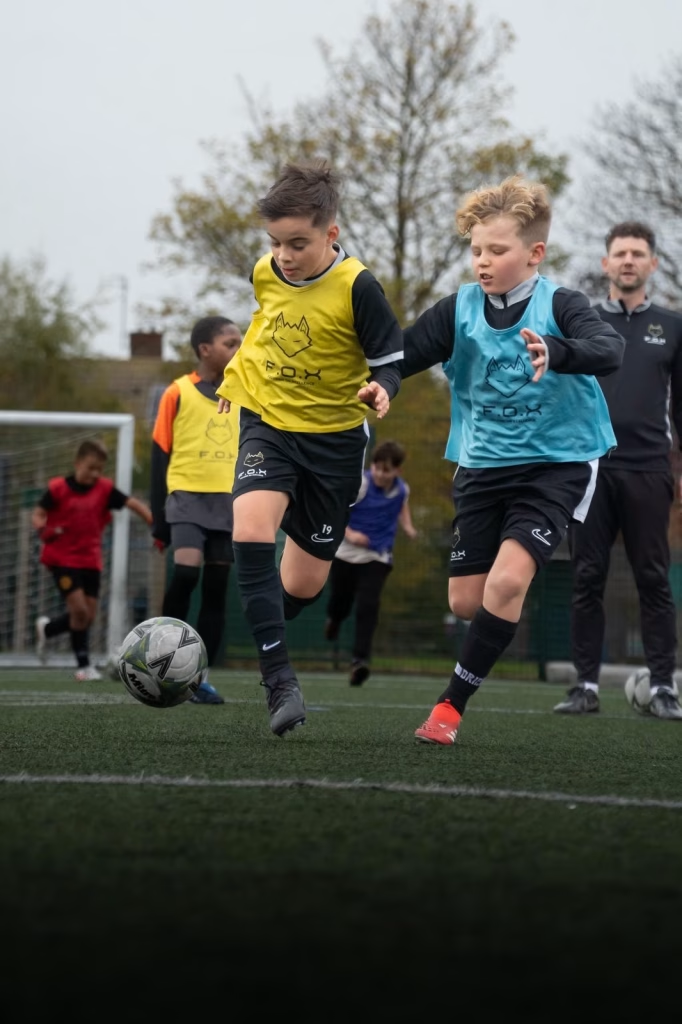
For a coaching business, a website has to do more than explain what sessions are available. It needs to build confidence quickly, especially when the service is aimed at children and parents are deciding who to trust.
A parent visiting the website is usually looking for practical answers. They want to know what age groups are covered, where sessions take place, who runs them, what the environment is like, how to book and whether the organisation feels professional, safe and reliable.
That means website design for coaching businesses, sports clubs and children’s activity providers needs to balance clarity, trust and action.
F.O.X Focusing on Xcellence is a useful Peterborough example. The business provides academy-inspired football coaching for children aged 3 to 14, with weekly sessions, tournaments, camps, birthday packages, a grassroots club pathway and online booking. The website needed to present a growing offer clearly while giving parents confidence in the quality of the coaching environment.
Start with parent confidence
When a business works with children, the website has to build trust before it asks for a booking.
Parents are not only comparing session times or prices. They are making a judgement about the organisation behind the activity. They want to feel that the business is credible, well run and clear about what it offers.
For a coaching business, that confidence can come from:
- Clear age ranges
- Session types explained simply
- Coach experience and approach
- Local venue information
- Strong photography
- Testimonials or reviews
- A professional brand presence
- Easy contact routes
- Clear booking instructions
The F.O.X website needed to communicate a high-standard, academy-inspired coaching environment while still feeling welcoming and accessible. That balance matters. A site can look polished but feel intimidating, or it can feel friendly but lack credibility. The strongest websites do both.
Make the offer easy to understand
Many coaching businesses grow gradually. They may start with a few sessions, then add camps, tournaments, one-to-one options, birthday parties, academy-style pathways or club opportunities.
That growth is positive, but it can make the website harder to understand if everything is added without a clear structure.
For F.O.X, the service offer included multiple routes for parents and players. The website needed to separate those options clearly, so parents could understand which part of the offer was right for their child.
This is important for any Peterborough coaching business. If the website has too much information on one page, visitors may struggle to compare options. If the structure is too thin, they may not get enough information to make a decision.
A better approach is to divide the offer into clear sections, such as:
- Weekly coaching
- Age-group sessions
- Development groups
- Advanced coaching
- Holiday camps
- Tournaments
- Birthday packages
- Club pathway
- Booking information
- Contact and venues
Each section should answer a specific parent question. What is it? Who is it for? Where does it happen? How does someone book? What should they expect?
Design around the parent journey
A good coaching website should be built around how parents actually make decisions.
A parent may arrive on the site after seeing a social media post, hearing about the business from another parent, searching Google, or being sent a link by a school or club. They may not know the full offer yet, so the website needs to guide them.
A typical parent journey might look like this:
- Understand what the coaching business offers
- Check whether it is suitable for their child’s age
- Look for practical location and timing information
- Assess whether the organisation feels trustworthy
- Review session options
- Find booking information
- Ask a question if something is unclear
The website should support that journey without unnecessary friction.
For F.O.X, that meant making the main service areas visible, using strong calls to action and helping visitors move from interest to booking. A coaching website should not leave parents guessing where to go next.
Use local information properly
Local detail is especially important for coaching businesses because parents need to know whether the service is practical for them.
For Peterborough-based coaching businesses, useful local information might include:
- Training venues
- Nearby areas served
- Parking or arrival instructions
- Session locations
- Local schools, clubs or facilities
- Contact details
- Links to maps or directions
- Information about where sessions take place
The F.O.X website includes practical Peterborough venue information, helping parents understand where sessions happen and whether the locations work for them.
This kind of information supports users first, but it can also help local search visibility. A website that clearly explains where the business operates is easier for both visitors and search engines to understand.
The key is to keep local information useful. It should not be added as filler. It should answer genuine questions.
Make booking simple
For coaching businesses, a booking journey should be clear and direct.
Parents are often busy. If they have decided that a session looks suitable, the website should not make them search for the next step.
Booking buttons should appear in sensible places, such as:
- Near the main session overview
- On individual session sections
- After age-group information
- On camp or tournament pages
- In the header or footer
- Near venue and contact details
For F.O.X, the website included booking-focused calls to action and links through to the live schedule and booking system. This helped reduce friction and move visitors from interest to action.
A clear booking journey can also reduce admin for the business. If the website answers common questions and guides users towards the right booking route, fewer people need to email or call for basic information.
Explain progression, not just sessions
Some coaching businesses offer more than one-off sessions. They may support long-term development, confidence, skill progression or pathways into teams and clubs.
That needs to be clear on the website.
For F.O.X, the site had to communicate more than weekly football coaching. It also needed to explain progression through a wider football development environment, including a grassroots club pathway and future opportunities.
This kind of content helps parents understand the value of the offer. They are not just booking an activity. They may be choosing a longer-term environment for their child’s development.
For other coaching businesses, progression might include:
- Beginner to advanced routes
- Age-group movement
- Development pathways
- Performance programmes
- Holiday camps leading into regular sessions
- Team or club opportunities
- One-to-one support
- Parent updates or progress tracking
A website that explains progression clearly can help a business stand apart from competitors offering similar sessions.
Balance professionalism with accessibility
A coaching website needs to look professional, but it should not feel cold or corporate.
Parents want to see that the business is organised and credible, but they also want to feel that their child will be welcomed and supported.
The F.O.X website had to reflect an academy-inspired coaching brand while remaining approachable for families. This is a useful lesson for other coaching businesses. Strong branding is important, but it should support the message rather than overwhelm it.
For a children’s coaching provider, the design should usually feel:
- Clear
- Energetic
- Confident
- Friendly
- Organised
- Easy to navigate
- Mobile-friendly
The copy should also avoid overcomplication. Parents should not need to decode technical coaching language before understanding whether a session is right for their child.
Build trust signals into the right places
Trust signals are most useful when they appear near the points where people make decisions.
For a coaching business, useful trust signals could include:
- Coach profiles
- Qualifications or experience
- Testimonials
- Parent feedback
- Photos from sessions
- Clear venue details
- Simple contact information
- Professional branding
- Frequently asked questions
- Clear policies or expectations where relevant
These should not all be hidden on one “about” page. Some should appear across the journey, especially near session information and booking calls to action.
For example, if a parent is reading about a session for a specific age group, a short reassurance point nearby can help. If they are about to book, a testimonial or clear contact option may remove doubt.
Good website design places reassurance where it is needed, not just where it happens to fit.
Make the website manageable after launch
Coaching websites often need regular updates.
Session times change. Venues may change. Camps are added. Tournaments are announced. Booking links need updating. New photos, testimonials and service pages may be needed as the business grows.
That means the website should be built in a way the business can manage.
For F.O.X, the website was designed as a stronger foundation for future growth. That is important because a website for a growing coaching business should not only solve the immediate problem. It should make future updates easier.
For a Peterborough coaching business, a manageable WordPress website might allow the team to update:
- Session information
- Age groups
- Timetables
- Booking links
- Camps and events
- Testimonials
- Venue details
- New services
- News or announcements
If the site is difficult to update, it will become inaccurate. If it becomes inaccurate, trust can quickly fall.
Support search visibility with clear structure
Website design and search visibility should not be treated as separate jobs.
A clear site structure helps visitors, but it also helps search engines understand what the business offers. For a coaching business, the structure might include dedicated pages or sections for different services, age groups, camps, venues or booking options.
For example, a football coaching business in Peterborough might need content around:
- Football coaching for children
- Age-group sessions
- Holiday football camps
- Birthday football parties
- Advanced coaching
- Tournaments
- Club pathway
- Peterborough venues
- Booking information
This does not mean creating unnecessary pages for every keyword variation. It means organising useful information in a way that reflects what parents are searching for and what they need to know.
The best SEO structure is usually the one that also makes the website easier to use.
What Peterborough coaching businesses can learn from F.O.X
The F.O.X project shows how a website can support both growth and trust.
A strong coaching website should:
- Explain the offer clearly
- Help parents find the right session
- Show age groups and venues
- Build confidence quickly
- Make booking simple
- Communicate professionalism and approachability
- Support future services and updates
- Strengthen local relevance
For a coaching business, the website is not just a place to list sessions. It is part of the customer journey from discovery to booking.
When the structure, copy, design and calls to action work together, the site can help parents make decisions with more confidence.
Planning a coaching website in Peterborough?
If you run a coaching business, sports club, children’s activity provider or local training organisation in Peterborough, your website should make your offer clear, build trust with parents and support bookings without unnecessary friction.
Jigowatt works with Peterborough businesses on bespoke WordPress websites built around structure, design, performance and long-term manageability.
For local website projects, see our web design for Peterborough businesses service, or read the full F.O.X Focusing on Xcellence case study to see how the project was approached.