For hospitality businesses, a website has to do more than look good. It needs to help people understand the venue, check what is on, view food and drink options, find key details and take action quickly.
That action might be booking a table, planning a night out, enquiring about a private event, checking the menu, or finding the address on a mobile phone while already nearby.
For restaurants, cafes, bars, taprooms, pubs and event venues in Peterborough, the website often acts as the first real impression. It has to show the atmosphere of the venue while still being practical enough to help people make decisions.
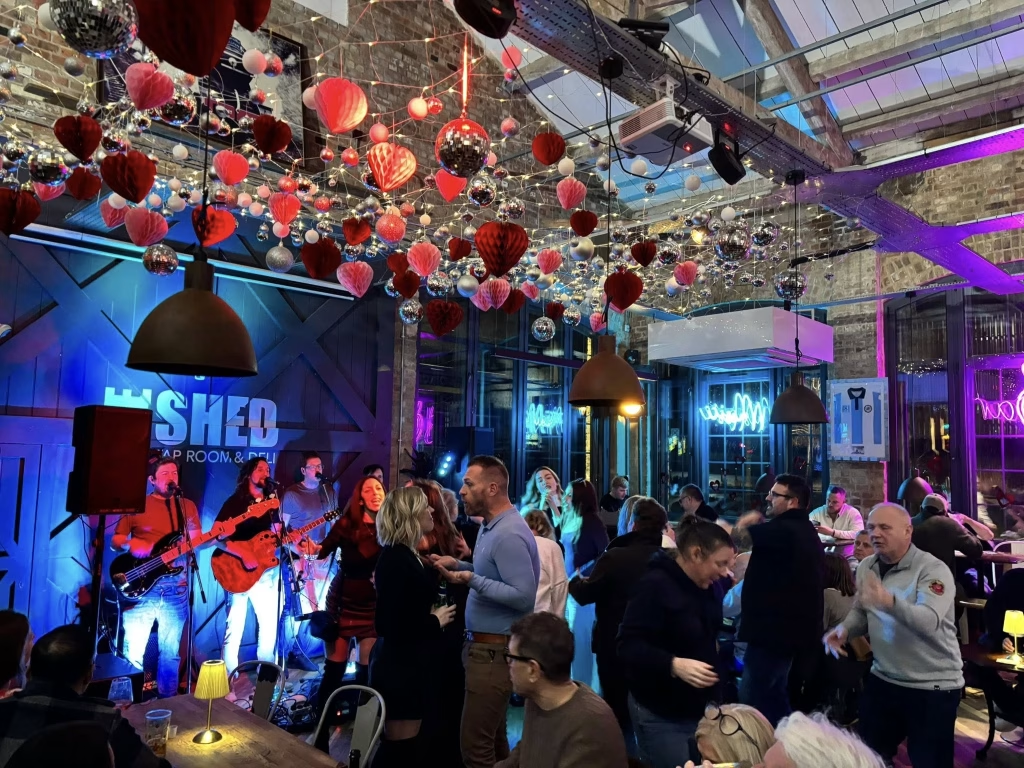
The Shed Taproom and Deli is a useful example. Based in Peterborough and set in a converted railway engine shed, The Shed combines Italian deli-style food, quality drinks, live music, comedy nights and group bookings. The website needed to present the venue’s character clearly while making booking and event information easy to find.
Start with the venue, not just the website
Hospitality website design should begin with the experience customers are buying into.
For The Shed, the building, atmosphere and offer are all part of the appeal. It is not just a taproom. It is a venue with food, drinks, events, live entertainment and space for planned occasions.
That makes the first few seconds of the website important. Visitors should quickly understand:
- What kind of venue this is
- Where it is based
- What they can do there
- Why it is different
- How to book or find out more
A generic homepage would not do enough. The design and content need to communicate personality, but without making people work too hard to find practical information.
For Peterborough hospitality venues, this is a useful principle. A website should not only say “restaurant”, “bar” or “cafe”. It should quickly show what makes the place worth visiting.
That could include:
- The setting
- The food and drink offer
- The type of atmosphere
- Live events or entertainment
- Private hire or group bookings
- Local suppliers or ingredients
- Family-friendly, evening, corporate or social positioning
The stronger the first impression, the easier it is for visitors to decide whether the venue is right for them.
Design navigation around real visitor intent
A hospitality website should be structured around what visitors actually want to do.
For The Shed, people may arrive with different intentions. Some want to see what events are coming up. Some want to view food and drink. Some want to book a table. Others may be planning a celebration or group visit.
That means the navigation has to support several journeys without becoming cluttered.
Useful hospitality navigation might include:
- What’s on
- Food and drink
- Menu
- Live music and comedy
- About
- News
- Contact
This kind of structure is more useful than a generic set of pages because it mirrors how people think.
A visitor rarely arrives thinking, “I would like to read a company profile.” They are more likely to think:
- Can I book?
- What food do they serve?
- Is anything happening this weekend?
- Can I bring a group?
- Where is it?
- What time are they open?
Good website design turns those questions into clear routes through the site.
Make booking actions obvious
For hospitality venues, booking is usually one of the most important website actions.
That does not mean every page needs to shout at the visitor, but booking should be easy to find from the pages where intent is highest. For example, someone looking at a menu, an event listing or a group bookings page should not have to search for the next step.
For The Shed, booking-focused calls to action were important across key pages. The website needed to support both spontaneous visits and planned occasions, so booking links and contact routes had to appear in sensible places.
For Peterborough venues, this can include:
- Book a table
- Reserve for an event
- Enquire about group bookings
- Plan a celebration
- Contact the venue
- View upcoming events
The best call to action depends on the page. A menu page might lead to “Book a table”. An events page might lead to “See what’s on” or “Book for this event”. A private hire page might lead to “Enquire about a group booking”.
Using the same button everywhere can be less effective than matching the action to the visitor’s intent.
Treat events as a reason to return
Many hospitality websites are built as static brochure sites, but venues with events need something more active.
If live music, comedy, themed nights, seasonal menus or special events are part of the business, the website should make those easy to browse and update.
The Shed website includes an events-focused structure, helping visitors see what is coming up and giving them reasons to return to the site. This is particularly useful for venues where the offer changes week by week.
For hospitality businesses, an events section can support:
- Repeat visits
- Social media promotion
- Email marketing
- Local search visibility
- Seasonal campaigns
- Better planning for customers
It also gives the website more life. Instead of being a static shop window, it becomes a current source of information.
The key is to make events manageable. If the events section is difficult to update, it will quickly become outdated. A good WordPress structure can make regular updates much easier for the venue team.
Make food, drink and menus easy to browse
Menus are often one of the most visited areas of a hospitality website.
That means they need to work well on mobile, be easy to scan and be simple to update. PDF menus can still be useful in some cases, but relying only on a PDF can make the experience weaker, especially on phones.
A better approach is often to create clear menu sections on the website itself, supported by downloadable menus only where needed.
For a taproom, pub, restaurant or cafe, this could include:
- Lunch menus
- Evening menus
- Drinks lists
- Children’s menus
- Dietary information
- Seasonal specials
- Group booking options
The aim is not to overload the visitor. The aim is to help them answer the practical questions that influence whether they visit.
For The Shed, food and drink were part of the venue’s character, so the website needed to support that clearly rather than treating the menu as an afterthought.
Show location and contact details clearly
Local hospitality searches are often high intent. Someone searching for a Peterborough venue may be ready to book, visit or contact the business quickly.
That makes location information important.
A hospitality website should make these details easy to find:
- Address
- Opening hours
- Phone number
- Email or contact form
- Directions
- Parking or nearby access information
- Social media links
This is especially important on mobile, where a visitor may be checking the site while already out in Peterborough.
The contact page should also support different enquiry types. A quick table booking is different from a private party enquiry, a supplier enquiry or a question about an event. Clear forms or contact routes help reduce friction and save time for the business.
Use photography and copy to communicate atmosphere
Hospitality is visual, but images need supporting copy.
Photography can show the food, drink, interior, events and atmosphere, but the copy should explain the experience. Together, they help visitors decide whether the venue feels right for them.
For The Shed, the venue’s personality was central to the project. The website needed to feel like a digital extension of the business, not a generic hospitality template.
For Peterborough hospitality venues, useful content might include:
- What the venue is known for
- The kind of experience customers can expect
- The story behind the location
- Events or entertainment
- Food and drink specialisms
- Whether the venue suits groups, families, dates, casual visits or celebrations
This kind of detail helps the website feel specific and memorable.
Build the website so the team can manage it
Hospitality websites need regular updates.
Menus change. Events are added. Opening hours shift. Seasonal offers come and go. Private booking information may need adjusting. Photos may need refreshing.
A website that looks good but is difficult to update will quickly become a problem.
That is why WordPress can be a strong fit for hospitality venues. With the right structure, a team can update event listings, page content, images and key information without needing to rebuild the site each time.
For venues in Peterborough, manageability should be part of the website brief from the beginning. The question is not only “what does the site need to look like?” It is also:
- Who will update it?
- How often will content change?
- Which sections need to be easy to edit?
- What needs approval before publishing?
- What happens if something breaks?
A manageable website is more likely to stay accurate, useful and trusted.
Do not separate design from search visibility
A hospitality website also needs to support search.
That does not mean forcing keywords into every paragraph. It means creating a clear structure that helps people and search engines understand the venue.
For a Peterborough hospitality business, important pages might include:
- Food and drink
- Menus
- Events
- Private hire
- Group bookings
- Live music
- Comedy nights
- Contact and location
- News or updates
ach page should have a clear purpose. That makes the website easier to use and gives search engines a better understanding of what the business offers.
Local search visibility is also supported by practical details such as address consistency, contact information, local wording, internal links and helpful content.
For example, an events page is not only useful for visitors. It can also help the business appear for event-related searches if it is structured properly and kept up to date.
What Peterborough hospitality venues can learn from The Shed
The Shed website project shows that hospitality web design works best when character and practicality are treated together.
A strong hospitality website should:
- Communicate the venue’s personality quickly
- Make food, drink, events and booking information easy to find
- Support different visitor journeys
- Use clear calls to action
- Work well on mobile
- Make updates manageable for the team
- Support local search visibility
The most effective websites are not just digital brochures. They help customers decide, act and return.
For a hospitality venue, that can mean more bookings, clearer enquiries, better event promotion and less time spent answering basic questions manually.
Planning a hospitality website in Peterborough?
If you run a restaurant, cafe, bar, taproom, pub or event venue in Peterborough, your website should work as a practical part of the business. It should explain your offer clearly, support bookings and enquiries, promote what is happening, and be easy to keep updated.
Jigowatt works with Peterborough businesses on bespoke WordPress websites built around structure, design, performance and long-term manageability. Offering website maintenance and WordPress support alongside local SEO for Peterborough businesses.
For local website projects, see our web design for Peterborough businesses service, or read the full The Shed case study to see how the project was approached.